Concrete Waste Guide
Everything you need to know about disposing of concrete construction materials
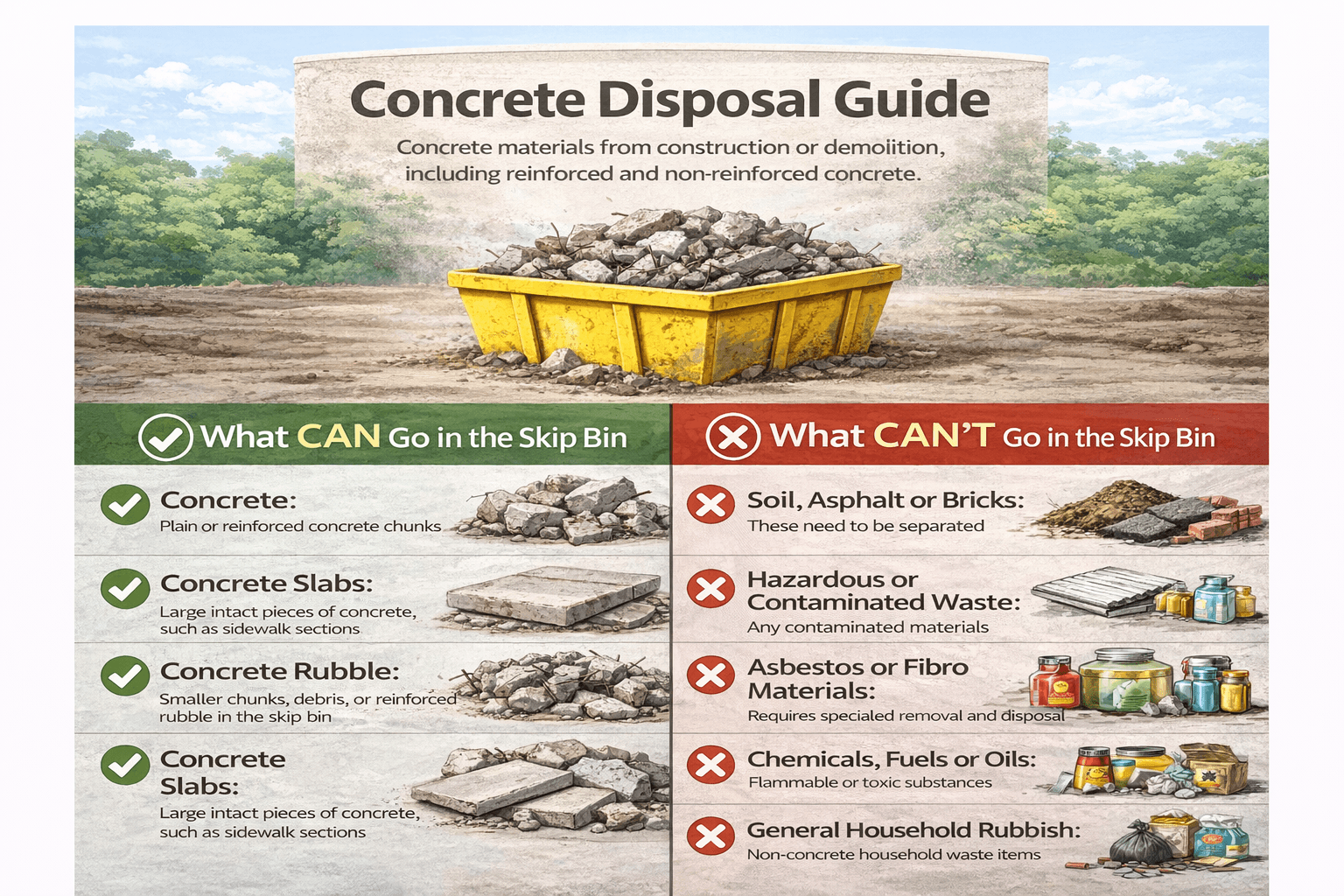
Concrete skip bins are designed specifically for concrete materials from demolition and construction projects, including reinforced and non-reinforced concrete. These bins have weight restrictions due to the dense nature of concrete. Keeping concrete waste separate ensures proper recycling and reduces disposal costs. This guide will help you understand what can and cannot go in a concrete skip bin.
Glass content & reclassification
If glass makes up more than 30% of the bin contents, the load may be reclassified and additional disposal charges may apply. Any reclassification must be supported by clear photos and disposal evidence before further an additional charge is approved.
If you expect a large amount of glass, contact us before booking so we can help you choose the appropriate waste type.
What CAN Go In
Concrete
Solid concrete pieces and blocks
Concrete Slabs
Whole or broken concrete slabs
Concrete Rubble
Crushed concrete debris from demolition
Concrete Blocks
Standard and lightweight concrete blocks
Concrete Pavers
Concrete paving stones and tiles
Concrete Footings
Foundation concrete from excavation
What CANNOT Go In
Reinforced Concrete (unless pre-approved)
Contact us for approval on reo concrete
Wet Concrete or Slurry
Asbestos Materials
Requires specialist removal and disposal
Timber or Wood
Use a general or construction waste bin
General Rubbish or Mixed Waste
Concrete bins are for concrete only
Soil or Dirt
Not accepted unless pre-approved
Hazardous or Contaminated Waste
Any contaminated materials
Chemicals, Fuels, Gas or Oils
Flammable or toxic substances
Plasterboard or Gyprock
Not accepted in heavy waste bins
Hot Ash
Weight Limits Apply
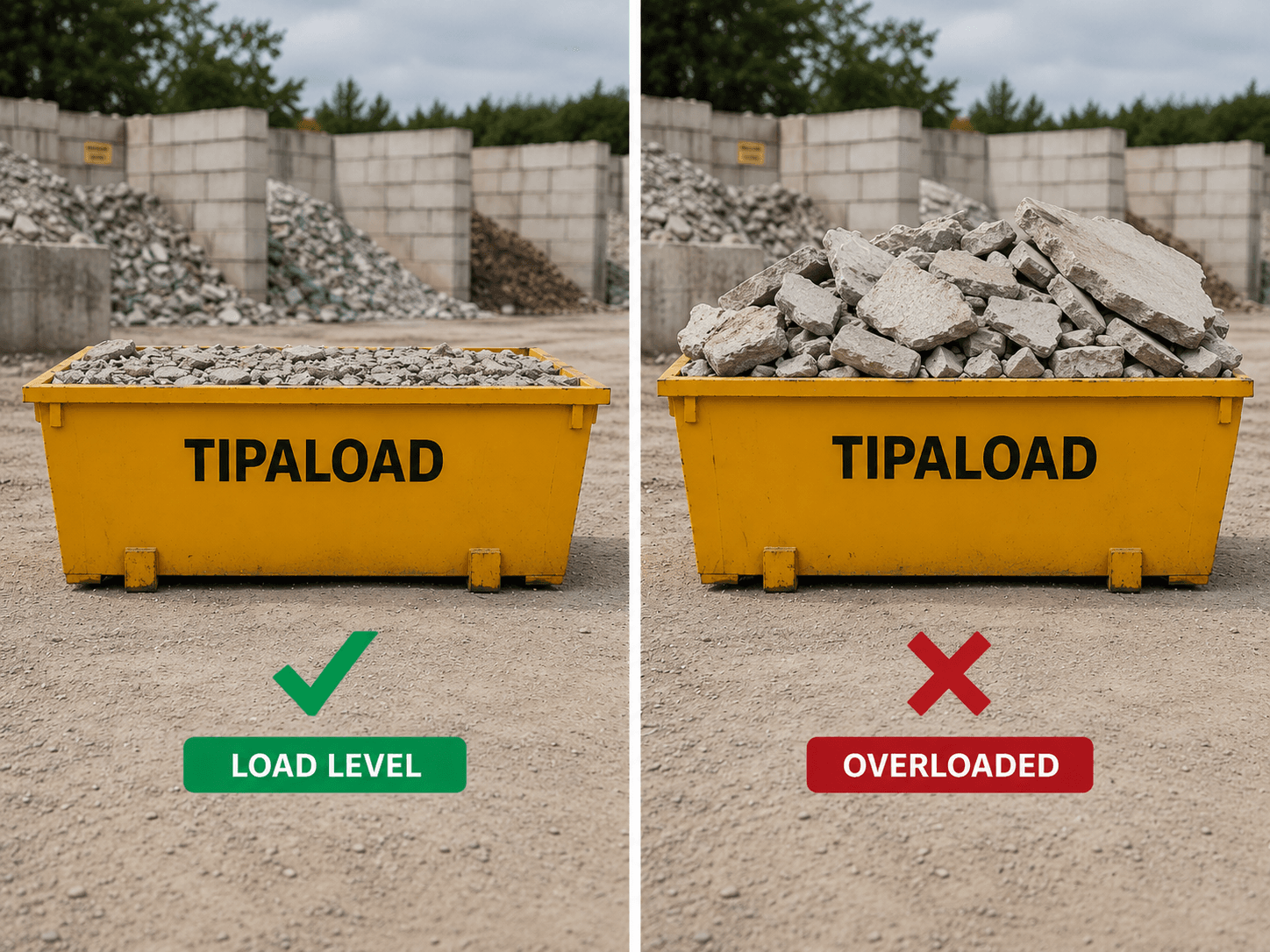
Concrete waste bins have strict weight limits. Overweight bins may incur additional charges. If you're unsure about weight or materials, please contact us before disposal.
Tips for Efficient Concrete Waste Disposal
Concrete Only
Keep the bin for concrete materials only. Mixing with other waste may incur additional charges.
Break Down Large Pieces
Break concrete slabs into manageable pieces to maximise bin space and ease handling.
Don't Overfill
Concrete bins have strict weight limits. Keep waste level with the top of the bin.
Ready to Book a Concrete Skip Bin?
Get a Tipaload quote and book your skip bin in minutes.
Get a Quote Now