Steel Waste Skip Bin Guide
Everything you need to know about what goes in a steel skip bin
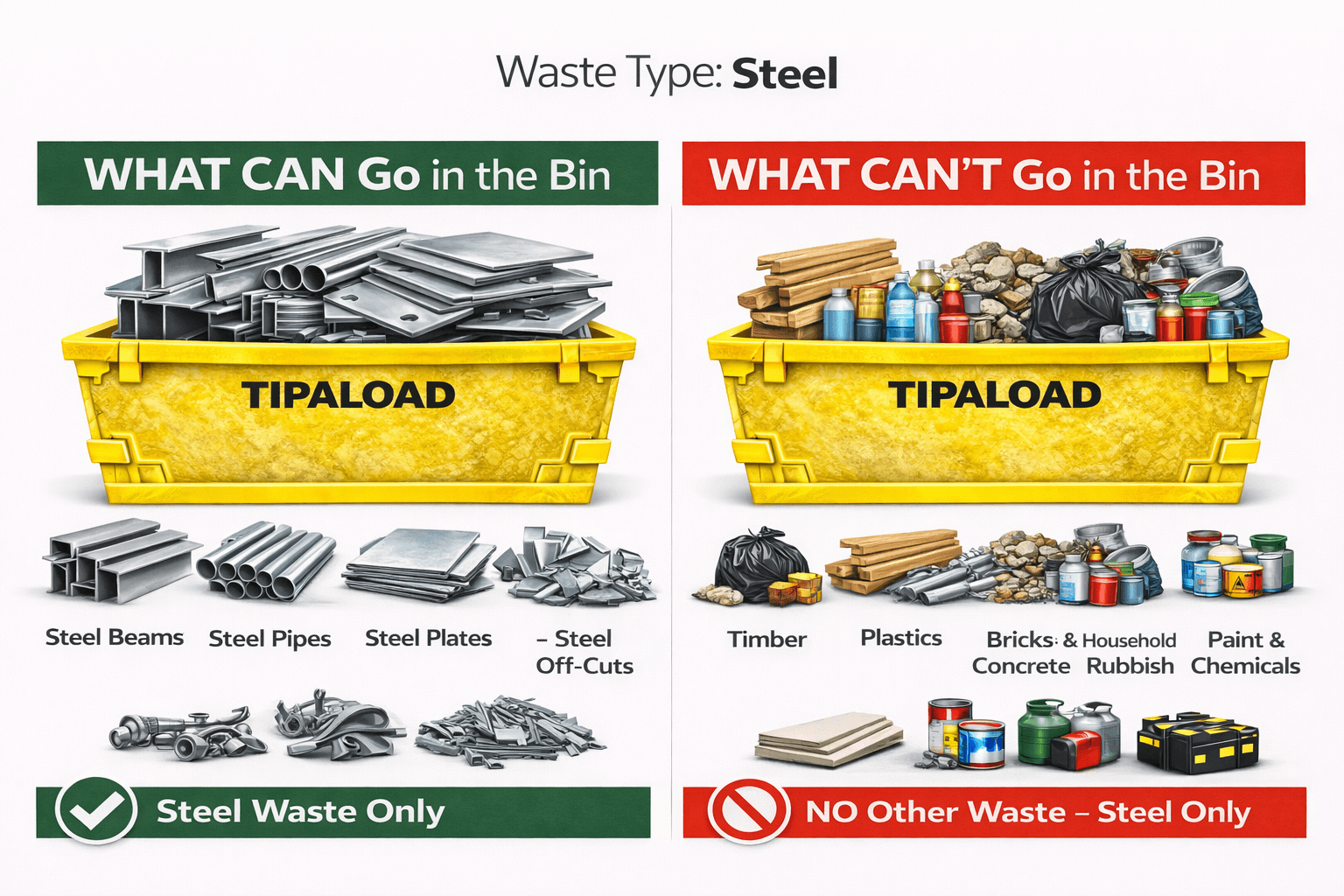
Steel is one of the most recyclable materials in Australia. Proper separation of steel waste helps reduce landfill and supports sustainable recycling practices. A steel skip bin is ideal for construction sites, demolition projects, workshops, and scrap clean-ups. This guide outlines what materials are accepted and what must be excluded.
Glass content & reclassification
If glass makes up more than 20% of the bin contents, the load may be reclassified and additional disposal charges may apply. Any reclassification must be supported by clear photos and disposal evidence before further an additional charge is approved.
If you expect a large amount of glass, contact us before booking so we can help you choose the appropriate waste type.
What CAN Go In
Steel Pipes
Structural or plumbing steel
Metal Sheets
Roofing or construction sheets
Scrap Metal
Offcuts and leftover metal pieces
Steel Framing
Construction framework
Metal Bars & Rods
Reinforcement materials
What CANNOT Go In
Asbestos Materials
Requires specialist removal and disposal
Hazardous or Contaminated Waste
Any contaminated materials
Chemicals, Gas Cylinders or Oils
Flammable or toxic substances
Medical Waste
Syringes, pharmaceuticals, clinical waste
Food or Liquid Waste
Organic food waste and any liquids
Concrete, Bricks or Masonry
Use a heavy waste bin instead
Soil or Dirt
Not accepted in steel bins
Timber, Plastics or General Household Waste
Use appropriate waste bins
Polystyrene or Insulation Panels
Foam and insulation materials
Wet Concrete or Slurry
Hot Ash
Important Notice
Steel bins must contain predominantly steel or metal materials. Contaminated loads may incur additional sorting charges.
Tips for Efficient Waste Disposal
Remove Non-Metal Attachments
Separate plastics or timber.
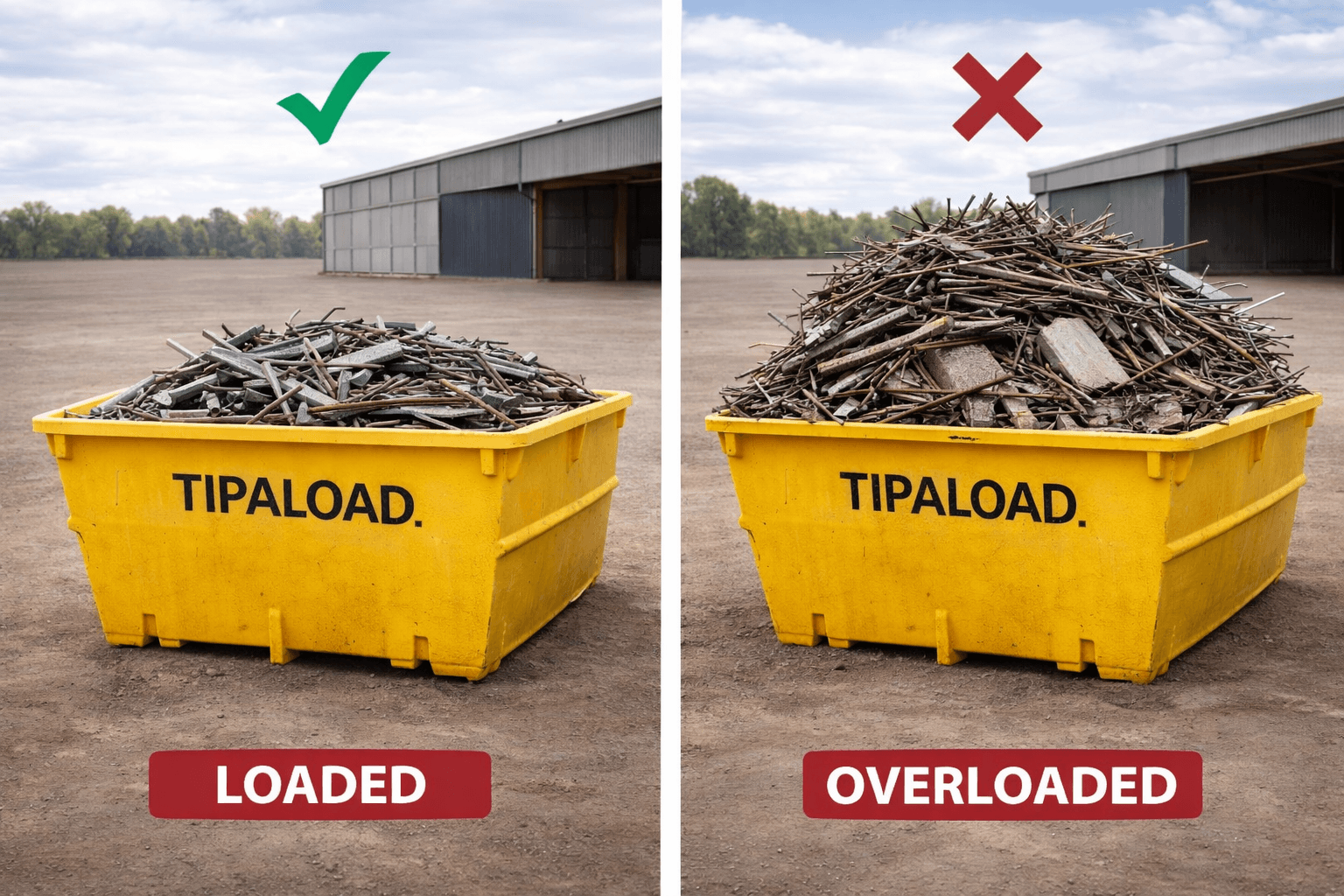
Stack Neatly
Lay metal flat to maximise space.
Avoid Contamination
Keep steel separate from other waste types.
Don't Overfill
Heavy materials must not exceed safe weight limits.
Ready to Book a Steel Skip Bin?
Get instant quotes from local suppliers and book your skip bin in minutes.
Get a Quote Now