Putrescible (Food Waste) Disposal Guide
Putrescible waste includes organic materials that decompose quickly, such as food scraps, leftovers, and fruit and vegetable peels. Proper disposal helps reduce landfill impact and supports composting and organic recovery programs.
Glass content & reclassification
If glass makes up more than 20% of the bin contents, the load may be reclassified and additional disposal charges may apply. Any reclassification must be supported by clear photos and disposal evidence before further an additional charge is approved.
If you expect a large amount of glass, contact us before booking so we can help you choose the appropriate waste type.
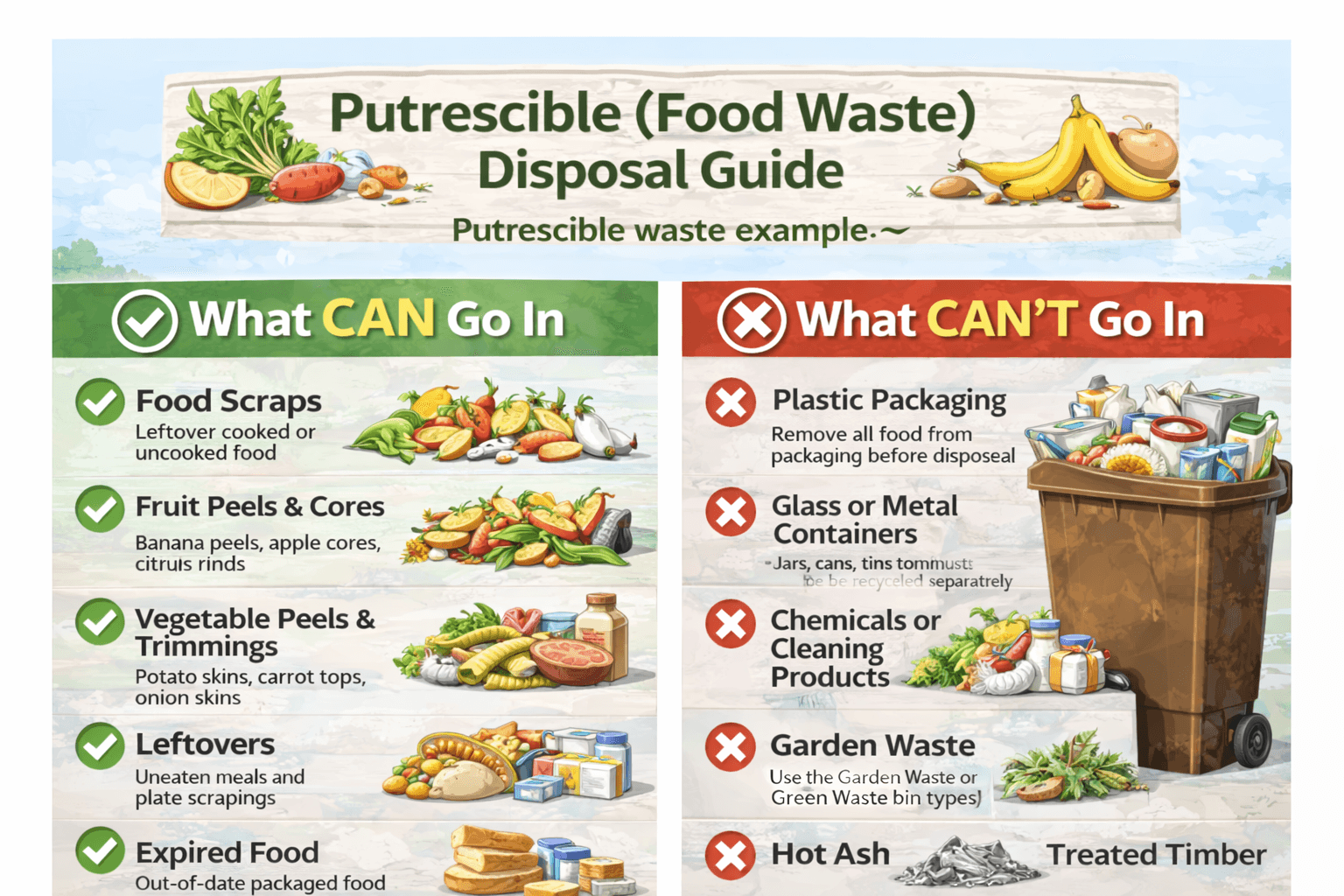
What CAN Go In
Food Scraps
Leftover cooked or uncooked food
Fruit Peels & Cores
Banana peels, apple cores, citrus rinds
Vegetable Peels & Trimmings
Potato skins, carrot tops, onion skins
Leftovers
Uneaten meals and plate scrapings
Expired Food
Out-of-date packaged food (removed from packaging)
Bread & Baked Goods
Stale bread, cakes, pastries
Dairy Products
Cheese, yoghurt, butter (small quantities)
Meat & Bones
Cooked or raw meat scraps and bones
What CANNOT Go In
Plastic Packaging
Remove all food from packaging before disposal
Glass or Metal Containers
Jars, cans, tins must be recycled separately
Chemicals or Cleaning Products
Toxic or hazardous substances
Garden Waste
Use the Garden Waste or Green Waste bin types
General Household Rubbish
Non-organic waste items
Asbestos or Hazardous Materials
Requires specialist disposal
Nappies or Sanitary Products
Not accepted in food waste bins
Liquids in Large Quantities
Drain excess liquids before disposal
Hot Ash
Treated Timber
Important Notice
Putrescible waste decomposes rapidly and can attract pests. Ensure all food waste is securely contained and bins are not left in direct sunlight for extended periods. Remove all packaging before disposal. If you're unsure whether an item is accepted, contact our team for guidance.
Tips for Disposing Food Waste
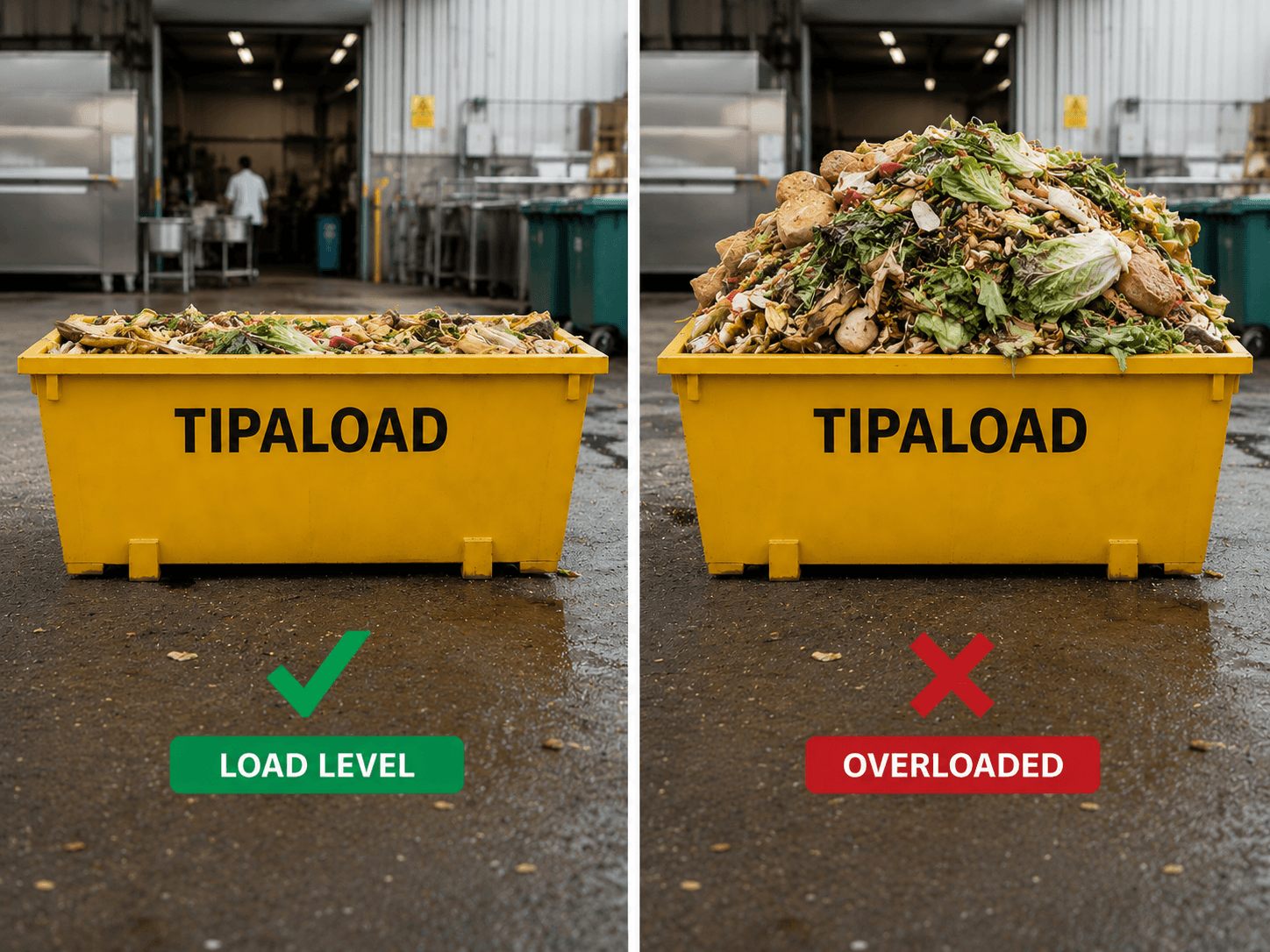
Remove All Packaging
Take food out of plastic, glass, or metal containers before placing it in the bin.
Minimise Odour
Wrap food scraps in newspaper or compostable bags to reduce smell, especially in warm weather.
Keep It Contained
Use sealed bags or containers within the bin to prevent leakage and pest attraction.
Ready to Book a Food Waste Bin?
Get an instant quote and have your bin delivered when you need it.