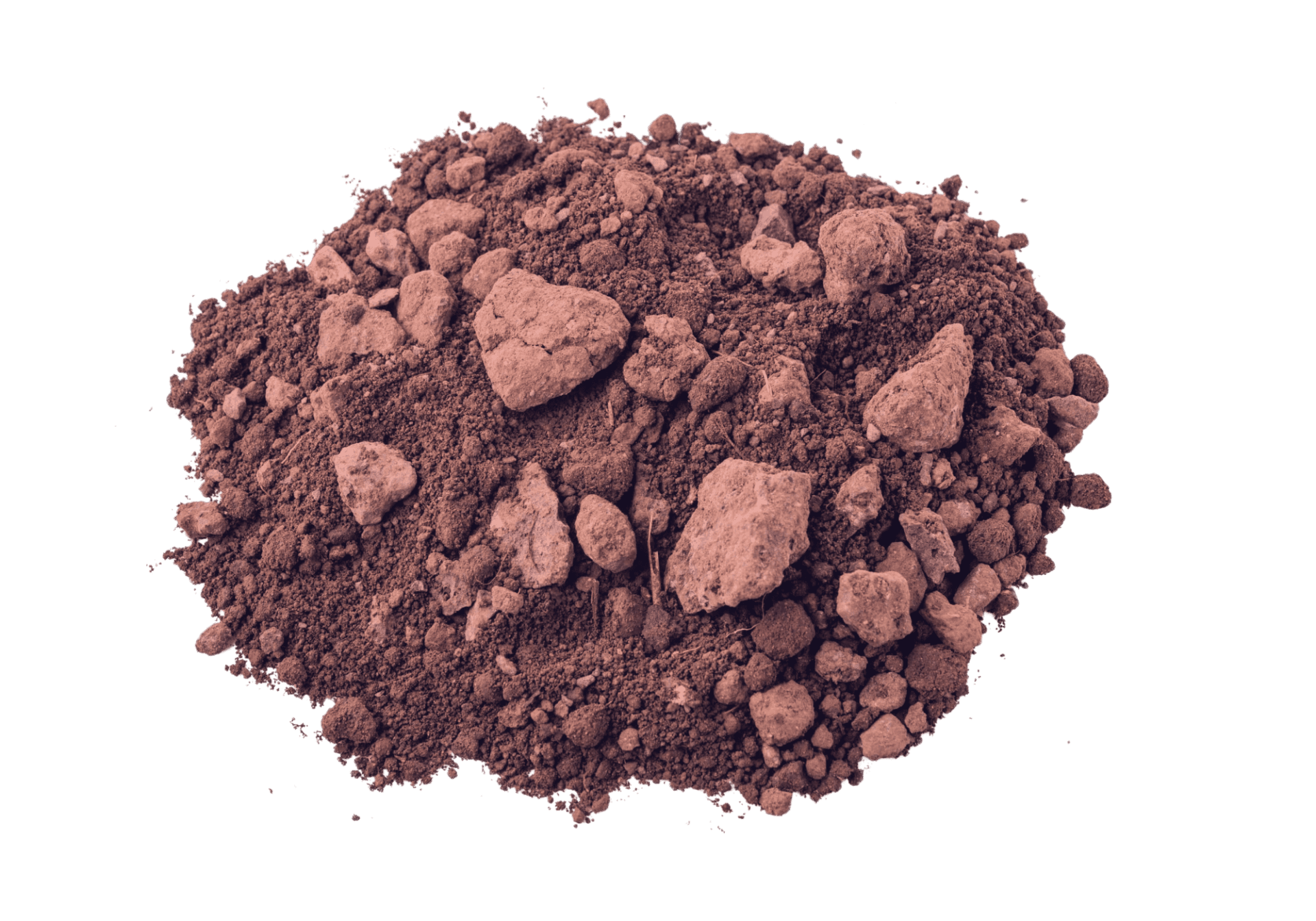
Clay Skip Bin Guide
Everything you need to know about what goes in a clay skip bin
Clay waste consists of dense, heavy soil materials commonly generated from excavation, landscaping, and construction site preparation. It typically includes natural clay or clay mixed with minimal debris. Hiring a dedicated clay skip bin ensures efficient handling, proper disposal, and environmental compliance.
Glass content & reclassification
If glass makes up more than 30% of the bin contents, the load may be reclassified and additional disposal charges may apply. Any reclassification must be supported by clear photos and disposal evidence before further an additional charge is approved.
If you expect a large amount of glass, contact us before booking so we can help you choose the appropriate waste type.
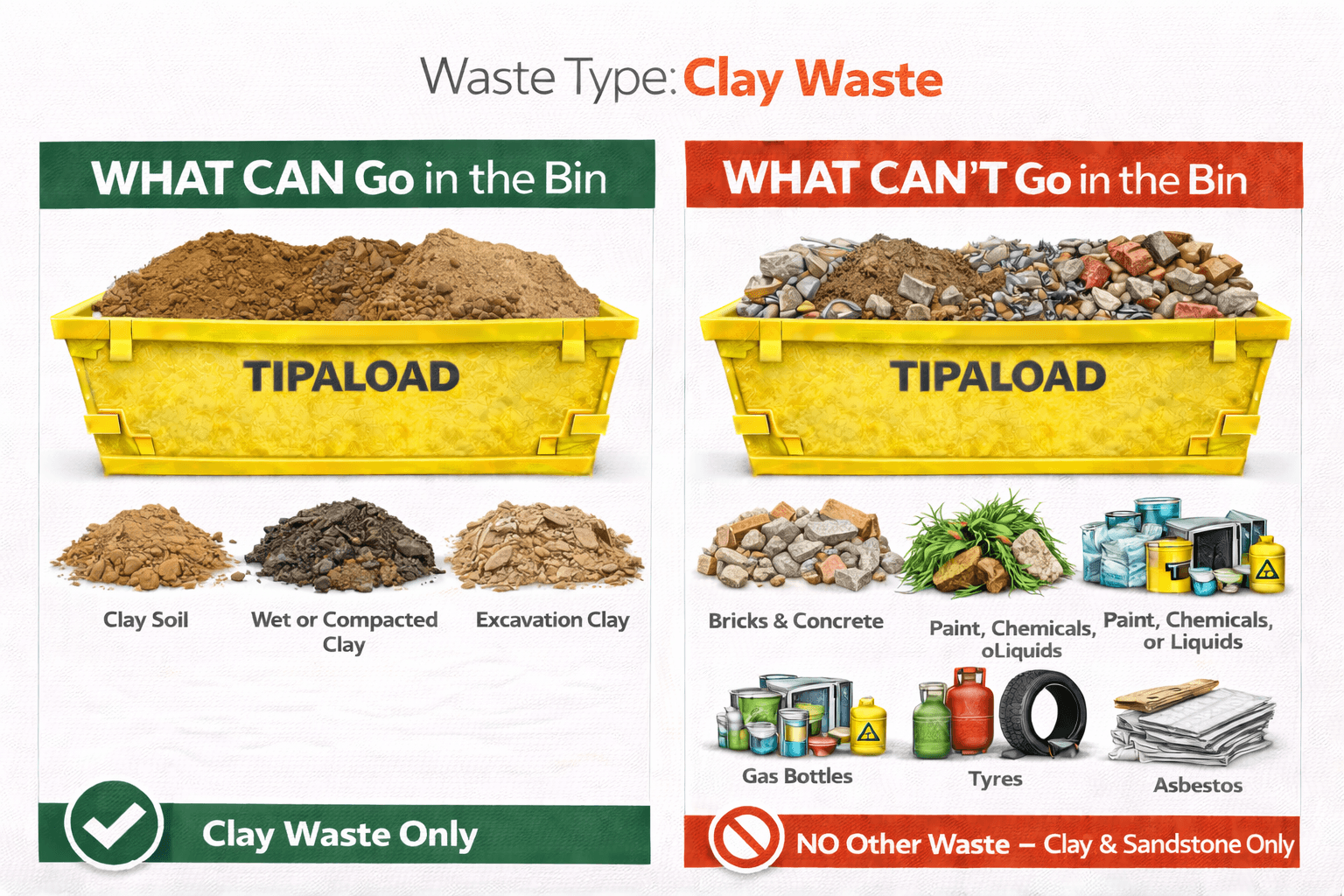
What CAN Go In
Pure Clay Soil
Uncontaminated natural clay from the ground
Wet or Compacted Clay
Dense, moisture-heavy clay materials
Clay from Excavation Sites
Earth removed during digging or trenching
Clay Mixed with Dirt
Clay with small amounts of natural dirt or soil
What CANNOT Go In
Asbestos Materials
Requires specialist removal and disposal
Hazardous or Contaminated Waste
Any contaminated materials
Chemicals, Oils or Fuels
Flammable or toxic substances
Construction Debris
Bricks, concrete, timber, metal — use a construction bin
General Household Rubbish
Use a household clutter bin instead
Green Waste
Use a garden waste bin instead
Sand or Sandstone
Use Clay & Sand or Clay & Sandstone bins
Rocks or Large Boulders
Oversized items that exceed weight limits
Wet Concrete or Slurry
Liquid or semi-liquid materials
Hot Ash
Fire residue still warm
Important Notice
Only clean, uncontaminated clay is permitted. Mixed loads containing sand, sandstone, or construction debris may be rejected or reclassified at additional cost.
Tips for Efficient Waste Disposal
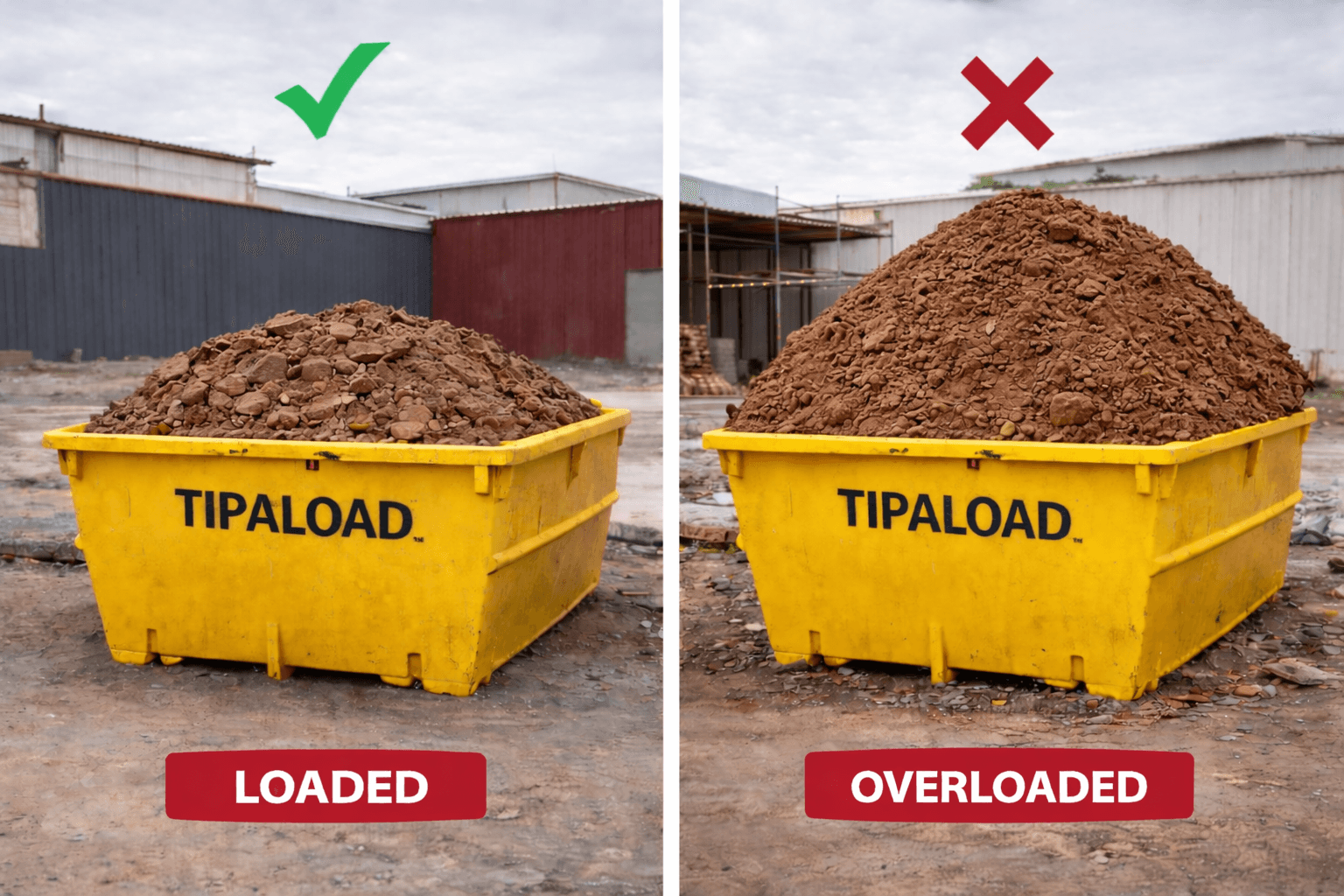
Keep It Pure
Do not mix clay with construction materials, sand, or rubble.
Avoid Contamination
No oil, chemicals, rubbish or debris in the bin.
Plan for Weight
Clay is extremely heavy when wet — choose the right bin size.
Don't Overfill
Maintain safe transport limits for heavy loads.
Ready to Book a Clay Skip Bin?
Get a Tipaload quote and book your skip bin in minutes.
Get a Quote Now